Best Cabin Luggage for Budget Flights UK: Aerolite Bags for Ryanair, easyJet & Weekend Trips
The suitcase should not be the main character of your airport day. This practical guide explains how to choose cabin luggage for budget flights, weekend trips, summer holidays and those tiny airline bag rules that somehow feel more stressful than the actual flight.

Why cabin luggage deserves more attention than we give it
Most of us think about luggage far too late. We book the flight, plan the outfits, save the restaurant recommendations, screenshot the hotel, then suddenly remember the bag the night before travelling. That is when the comedy begins: one zip refusing to close, one pair of sandals behaving like it pays rent inside the suitcase, and one person saying, very confidently, “I can just wear three layers to the airport.”
Cabin luggage matters because it controls three things at once: how much you can pack, how easy your journey feels and how likely you are to avoid surprise baggage fees. On budget airlines, the difference between a small under-seat bag and a larger cabin bag is not a tiny detail. It can change what you are allowed to bring on board, whether your bag must go under the seat, whether you need Priority, and whether your cheap flight stays cheap.
The goal is not to buy the biggest bag possible. That is how you end up dragging half your bedroom through security. The goal is to buy the right bag for the kind of trips you actually take. If you usually do two-night city breaks, a compact soft bag may be more useful than a large suitcase. If you travel for a full week, a structured suitcase can make packing easier and stop your clothes arriving in a state best described as “laundry basket with ambition.”
This guide focuses on Aerolite because the brand has options for the common UK travel situations: Ryanair trips, easyJet flights, short breaks, larger holidays, eco-conscious choices and general best sellers. But the buying advice applies to cabin luggage in general. Read it as a decision guide first, then use the shopping links only when you know what you need.
Before you buy: understand the airline rules
Airline luggage rules are not romantic. Nobody puts “checking baggage dimensions” on their dream holiday vision board. But this is the boring five-minute step that can save you money at the airport.
easyJet generally allows one small under-seat cabin bag per passenger for free. The published maximum size is 45 x 36 x 20 cm, including wheels and handles. Ryanair includes one small personal bag with all fares, currently listed as 40 x 30 x 20 cm, and Priority normally adds a second 10kg cabin bag up to 55 x 40 x 20 cm. UK liquid rules can also vary by airport, so always check your departure airport before packing full-size toiletries.
The key words are “including wheels and handles.” This is where travellers get caught out. A suitcase body might look fine, but the wheels and handle can push it over the limit. Airline sizers do not care that the bag “basically fits” or that you are emotionally attached to the extra jumper inside. They are cold little metal rectangles with no mercy.
Real Aerolite bag examples to compare before you buy
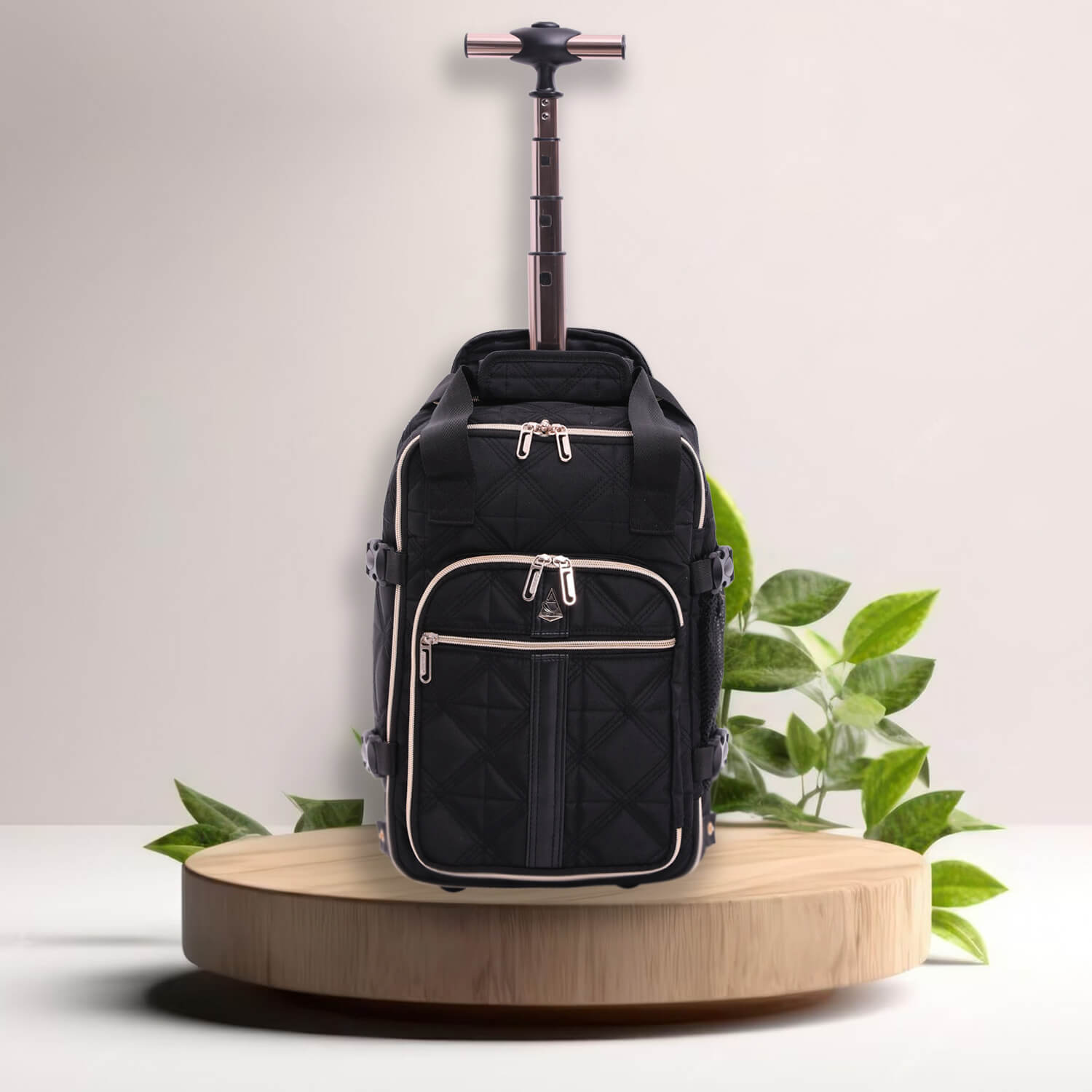
Product photos are useful when they show the actual structure of the bag. You want to see whether the luggage looks rigid or soft, whether the shape is easy to pack, and whether the style suits the type of trip you have in mind. A photo will not tell you everything, but it can help you decide whether you prefer a suitcase-style case or a softer travel bag.

The simple rule: match the bag to the trip, not the fantasy
The biggest luggage mistake is buying for the traveller you imagine you are, not the traveller you actually are. Imaginary you packs one linen shirt, one book and a calm personality. Real you wants options, snacks, chargers, skincare, a spare outfit and one pair of shoes that might be needed if the evening becomes “a bit nicer.” This is not failure. This is simply data.
For one or two nights, a small under-seat bag can be enough if you pack carefully. It works best for light travellers, summer trips, business-style overnight stays, or weekend visits where you are not changing outfits every five minutes. For three or four nights, a cabin suitcase or larger cabin bag is usually more comfortable because you can pack a few outfit combinations without crushing everything. For five to seven nights, especially in winter or for beach holidays, a large suitcase may be more realistic.
The other thing to consider is your destination. A hard-shell suitcase is neat in airports and hotels, but if you are staying somewhere with cobbled streets, stairs or a tiny old lift, wheels and weight matter. A soft bag may be easier to lift into overhead racks or taxis, but it may not protect fragile items as well. There is no perfect universal luggage. There is only the best fit for your journey.
Cabin bag, under-seat bag or large suitcase: what is actually best?
| Trip type | Best luggage choice | Why it works |
|---|---|---|
| One-night trip | Small under-seat bag | Easy to carry, quick to board with and usually enough if you pack one outfit change. |
| Two-night weekend break | Soft cabin bag or compact suitcase | Gives a little more flexibility for shoes, toiletries and a light layer. |
| Three to four nights | Cabin suitcase | Better if you want multiple outfits, a spare pair of shoes and a more organised layout. |
| Five to seven nights | Large cabin bag or checked suitcase | More realistic for beachwear, full toiletries, evening outfits and shopping space. |
| Winter travel | Large suitcase | Jumpers, coats and boots take space fast. Winter packing laughs in the face of minimalism. |
| Budget airline travel | Airline-specific bag | Helps reduce the risk of surprise gate charges or awkward bag-sizer drama. |
Useful shopping shortcuts, without link overload
I am keeping this guide light on affiliate links because the most useful luggage article should help you decide first. These are the main places I would start depending on your trip style.
Aerolite Best Sellers easyJet Cabin Luggage Ryanair Cabin Bags Large Suitcases Eco-Friendly BagsHow to choose luggage for Ryanair without losing your joy
Ryanair can be a brilliant choice for low-cost travel, especially for short European breaks. The trick is not treating the baggage allowance casually. If your fare includes only a small personal bag, you need to think like a packing engineer. That means flat items, flexible fabrics, limited shoes and no “just in case” coat that could survive a snowstorm in Norway when you are going to Valencia in July.
For Ryanair, check your fare first. If you have only the small personal bag, a soft under-seat style bag can be useful because it may give you more flexible packing space than a rigid mini suitcase. If you have Priority and a second 10kg cabin bag, a small suitcase can make more sense. This is where an airline-specific luggage category helps, because it narrows the search to bags designed around the airline style of travel.
My rule for Ryanair packing is simple: do not fill every corner just because you can. Leave a little breathing room for your return journey. Most people pack perfectly on the way out and then forget that souvenirs, snacks, wet swimwear, beach cover-ups and that one “tiny” airport purchase need space too. A bag that is already fighting for its life at home will not become more relaxed after three days abroad.
How to choose luggage for easyJet city breaks
easyJet is often a good option for UK travellers doing city breaks, beach weekends and short European trips. The free small cabin bag allowance can work well if you are disciplined. It is especially useful for warm-weather destinations where clothes are lighter, shoes are smaller and you do not need heavy layers. But again, the measurements include handles and wheels, so do not rely on guesswork.
For a two-night easyJet trip, think in outfits rather than items. One pair of comfortable shoes worn on the plane, one spare top, one smarter top, one bottom, underwear, mini toiletries and a light layer can be enough. For three or four nights, you will probably want more structure, especially if you are packing a camera, laptop, hair tools or multiple shoes. This is where a cabin suitcase can feel less chaotic than a soft bag.
easyJet trips are also where the “personal item versus paid cabin bag” decision matters. If paying for an extra cabin bag means you avoid checked luggage, arrive faster and keep your belongings with you, it may be worth it. But if the trip is short and you are travelling light, a well-chosen under-seat bag can keep the total trip cost lower.
What makes a cabin bag genuinely useful?
A useful cabin bag is not just one that fits. It should make packing easier. Look for a shape that gives you usable internal space rather than awkward corners. A bag can look large from the outside and still be annoying inside if the compartments are badly placed. Good internal organisation helps separate clothes, toiletries, chargers and travel documents, especially when you need to find something quickly at security.
Weight matters too. A lightweight bag gives you more room for actual belongings before you hit any allowance limits. This becomes especially important if you are carrying the bag through train stations, up stairs or across long airport terminals. Wheels are helpful, but only if the surfaces are smooth. For old towns, small guesthouses or apartments without lifts, a bag you can carry comfortably may be more useful than a gorgeous suitcase that behaves like a stubborn shopping trolley.
Handles also matter. A top handle is essential. A side handle is useful for lifting the bag into overhead lockers or car boots. If you choose a backpack-style travel bag, padded straps make a real difference. If you choose a suitcase, check that the handle height feels comfortable for your body. Luggage that forces you into an awkward walking position will irritate you before you even reach departures.
A smarter way to pack cabin-only
Most people overpack because they pack individual items instead of complete combinations. Before putting anything in the bag, make three full outfits on the bed. Then remove anything that does not work with at least two other things. This sounds strict, but it is the difference between a neat cabin bag and a fabric avalanche.
For a three-night summer city break, try this formula: two bottoms, three tops, one light layer, one pair of comfortable shoes worn on the plane, one smarter item for dinner, underwear, sleepwear, mini toiletries, chargers and documents. For a beach trip, add swimwear and a cover-up, but keep shoes minimal. Shoes are the suitcase villains. They look innocent until you realise they have stolen half the available space.
Should you choose hard-shell or soft luggage?
Hard-shell luggage is good if you like structure. It protects the shape of the bag, stacks neatly and often looks smarter in airports. It is useful if you carry items that could be crushed, such as tech accessories, toiletries or anything fragile. Hard-shell cases can also make packing cubes work better because the case keeps its form.
Soft luggage is better if you want flexibility. It can be easier to squeeze under seats or into tight spaces, and it often feels lighter. Some soft bags also have external pockets, which are useful for passports, liquids, chargers or a book. The downside is that soft bags can bulge if you overpack, and bulging is exactly what makes airline size limits more stressful.
For budget flights, the safest choice depends on the fare. If the bag must fit under the seat, soft can be more forgiving. If you have a larger cabin allowance, a hard-shell suitcase can help keep everything organised. If you are shopping for one bag to cover several trip types, think about your most common journey, not the one-off holiday you might take next year.
When a large suitcase is actually the sensible option
There is a strange pressure online to travel with the smallest bag possible, as if needing a large suitcase means you have personally failed minimalism. Ignore that. Sometimes a large suitcase is simply the correct tool. A seven-night holiday, a winter city break, a family trip, a wedding abroad or a destination where you plan to shop may all justify checked luggage.
A large suitcase can also reduce stress if you are travelling with liquids, full-size sun cream, hair products, multiple shoes, gifts or children’s items. It may cost more than cabin-only travel, but it can make the journey calmer. The key is to choose large luggage with enough structure, strong wheels and a manageable weight when empty. A huge suitcase that is already heavy before packing is basically a gym session with a zip.
If you are travelling as a couple, one shared checked suitcase plus two small cabin bags can sometimes work better than two separate large cases. You save space, reduce luggage handling and still have essentials with you on board. Keep documents, medication, chargers and one spare outfit in your cabin bag in case checked luggage is delayed.
Eco-friendly luggage: worth considering?
Eco-friendly luggage can be worth considering if you want your travel purchases to feel a little more intentional. No suitcase is perfect from an environmental point of view, but choosing a bag you will use repeatedly is already better than buying cheap luggage that breaks after one trip. Durability is part of sustainability. A bag that survives years of travel is usually a smarter buy than one that looks cute once and then loses a wheel in Alicante.
When comparing eco-friendly or more conscious luggage, look at materials, build quality and whether the design suits your actual travel habits. Do not buy something just because the word “eco” appears somewhere on the page. Buy it because it works for your trips and you are likely to keep using it. The most sustainable suitcase is often the one you do not need to replace.
How luggage affects the full trip budget
When people compare flights, they often look only at the headline fare. That can be misleading. A flight that looks cheaper may become more expensive once you add cabin bags, checked luggage, seat selection, airport transfers and hotel location. Luggage is part of the total travel cost, not a separate afterthought.
If you are planning a city break, compare the full journey: flight price, baggage add-ons, hotel location, airport transfer and how much you will spend once you arrive. Sometimes a slightly more expensive flight with better times and easier baggage is better value than the cheapest possible flight that leaves at dawn, arrives miles outside the city and requires you to pack like a monk.
For package-style trips, checking flight and hotel together can be useful because it gives you a clearer view of the total cost. If you are comparing destinations or travel dates, it is worth checking combined options before deciding whether cabin-only travel is really the cheapest choice.
Planning the trip as well as the bag?
If you are still comparing flight dates, hotels and total trip prices, this Expedia flight + hotel link is the one I would use for a higher-intent travel search. It is better placed here than scattered all over the article because by this point you are thinking about the full trip, not just the suitcase.
Compare Flight + Hotel Packages on ExpediaThe airport test: five questions before you buy
Before buying any cabin bag, imagine the full airport day. Can you lift it into the overhead locker yourself? Can you pull it quickly if you are changing trains? Can it stand upright while you are checking your phone? Can you open it easily if security asks to see liquids or electronics? Can you carry it up a flight of stairs without questioning your life decisions?
Then think about the return journey. Will there be room for souvenirs? Will damp swimwear need a separate pouch? Will you buy snacks, skincare or clothes? Are you likely to travel with a laptop? Do you need space for medication, chargers, a plug adapter or a travel pillow? The best luggage is not the one that fits only under ideal conditions. It is the one that still works when real travel gets messy.
The final test is storage at home. If you live in a flat or have limited storage, a huge suitcase might become annoying between trips. A soft bag can fold more easily, while hard-shell luggage protects belongings better but takes up fixed space. Practicality does not end when the holiday ends. Sadly, the suitcase does come home with you.
Common cabin luggage mistakes to avoid
Buying without checking dimensions
Always check the external measurements, including wheels and handles. A “cabin size” label does not automatically mean it works for your airline or fare.
Ignoring the bag’s empty weight
A heavy empty case eats into your allowance before you pack anything. Lightweight luggage gives you more usable packing capacity.
Packing too many shoes
Shoes are the silent suitcase destroyers. Wear the bulkiest pair and pack only what you will genuinely use.
Forgetting airport liquids
Do not assume every UK airport has the same liquid rules. Check before packing full-size toiletries in hand luggage.
Choosing style over function
A pretty bag is lovely, but wheels, handles, weight and compartments matter more when you are tired, late or hungry.
Leaving no return space
If your bag is full on the way out, the return journey will be a zip-based negotiation. Leave a little extra room.
FAQ: cabin luggage for Ryanair, easyJet and weekend trips
What is the best cabin luggage for Ryanair?
The best luggage for Ryanair depends on your fare. If you only have the included small personal bag, look for a compact under-seat option and pack very carefully. If you have Priority with a second 10kg cabin bag, a small suitcase can be more comfortable. Always check your booking before travelling.
What is the best cabin luggage for easyJet?
For easyJet, start by checking whether your fare includes only the small under-seat cabin bag or a larger cabin bag. For short trips, a soft under-seat bag can work well. For longer city breaks, a cabin suitcase gives you more structure and packing space.
Is a hard suitcase better than a soft cabin bag?
A hard suitcase is better for structure and protection. A soft bag is better for flexibility and under-seat packing. The best choice depends on your airline, your fare and how you travel.
Can you travel for a week with cabin luggage only?
Yes, but it depends on the season and destination. Summer trips are easier because clothes are lighter. Winter trips are harder because jumpers, coats and boots take more space. For seven nights, many travellers will be more comfortable with a larger suitcase.
How do I stop overpacking?
Pack by outfit, not by item. Choose a small colour palette, wear your bulkiest shoes and remove anything that does not match at least two other things. Also be honest about your itinerary. If you are not going to three formal dinners, you do not need three formal outfits.
Should I buy luggage before booking flights?
Ideally, check the airline baggage rules before buying luggage. If you often fly the same airline, an airline-specific bag can make sense. If you use different airlines, choose a flexible bag that works for your most common routes.
Final thoughts: buy the bag that saves your airport mood
The best cabin luggage is not always the biggest, prettiest or most expensive. It is the bag that fits your airline rules, your trip length, your packing style and your actual life. If a suitcase helps you avoid gate stress, surprise fees and sitting on the zip at midnight while whispering “please,” it is already doing its job.
For regular budget flights, focus on airline-specific cabin luggage. For mixed travel, start with best sellers and compare the size carefully. For longer holidays, do not force cabin-only packing just to prove a point. Sometimes a large suitcase is not overpacking. Sometimes it is simply peace with wheels.
My honest buying advice is this: choose luggage that makes your next three trips easier, not just your next one. That is how a travel essential becomes genuinely useful rather than another thing hiding in the cupboard.
Want more practical travel finds?
Join my travel list for budget-friendly trip ideas, packing guides, luggage tips and useful travel finds before your next city break. No spam — just the kind of travel help you actually need before booking, packing or panic-buying a cabin bag at midnight.
Disclosure: This post contains affiliate links. I may earn a small commission at no extra cost to you if you buy or book through these links. Product availability, prices, airline baggage rules and airport liquid rules can change, so always check the official airline and airport guidance before travelling.



Comments
Post a Comment